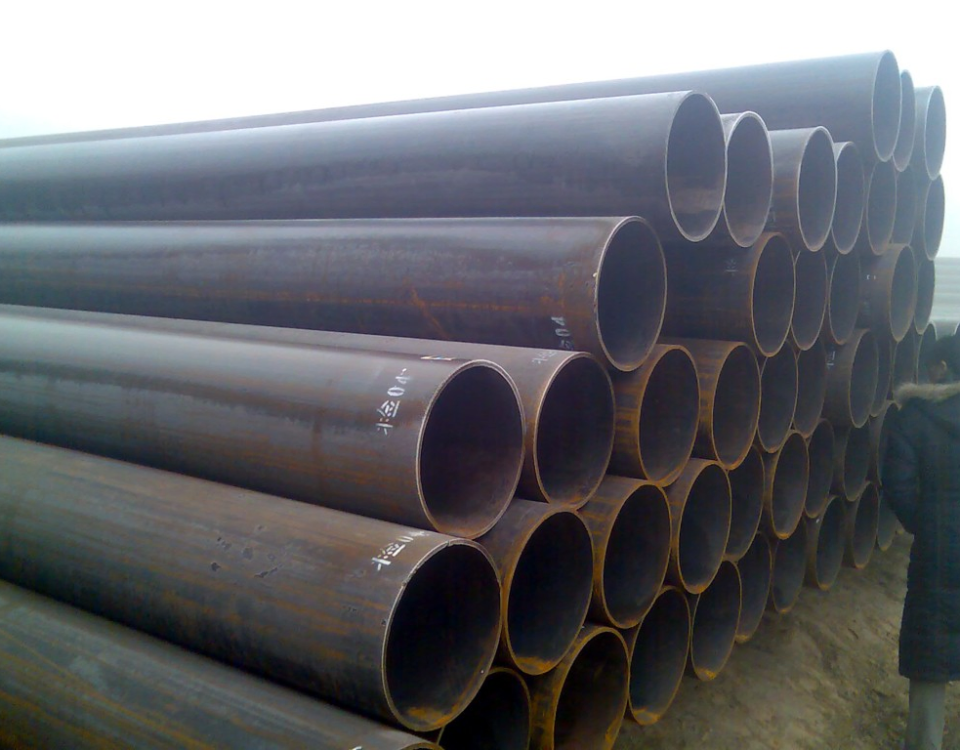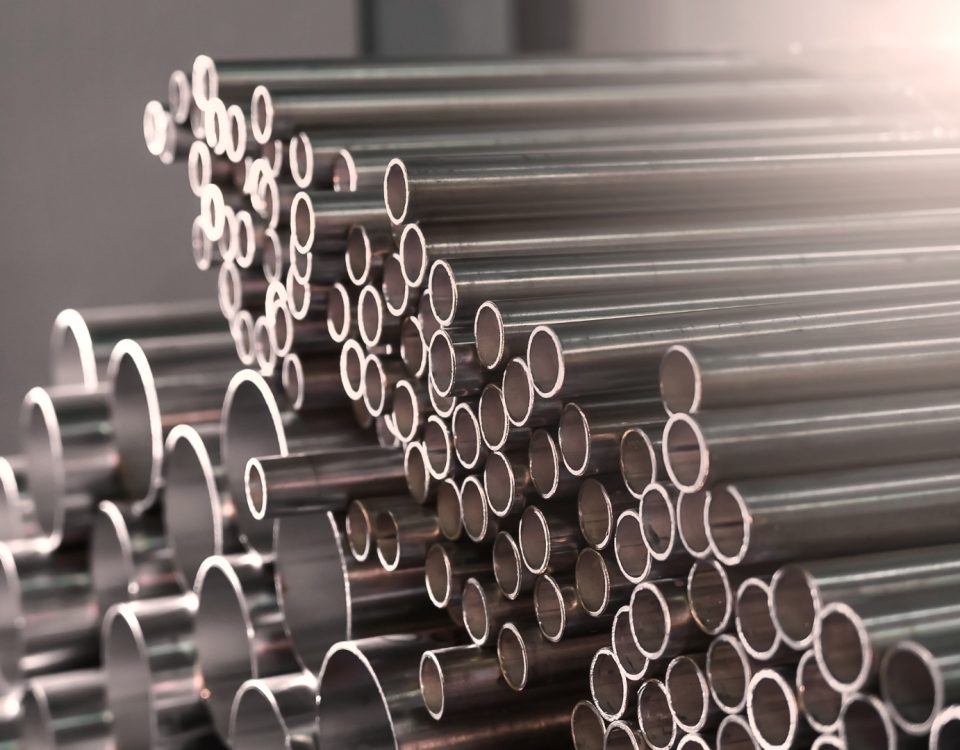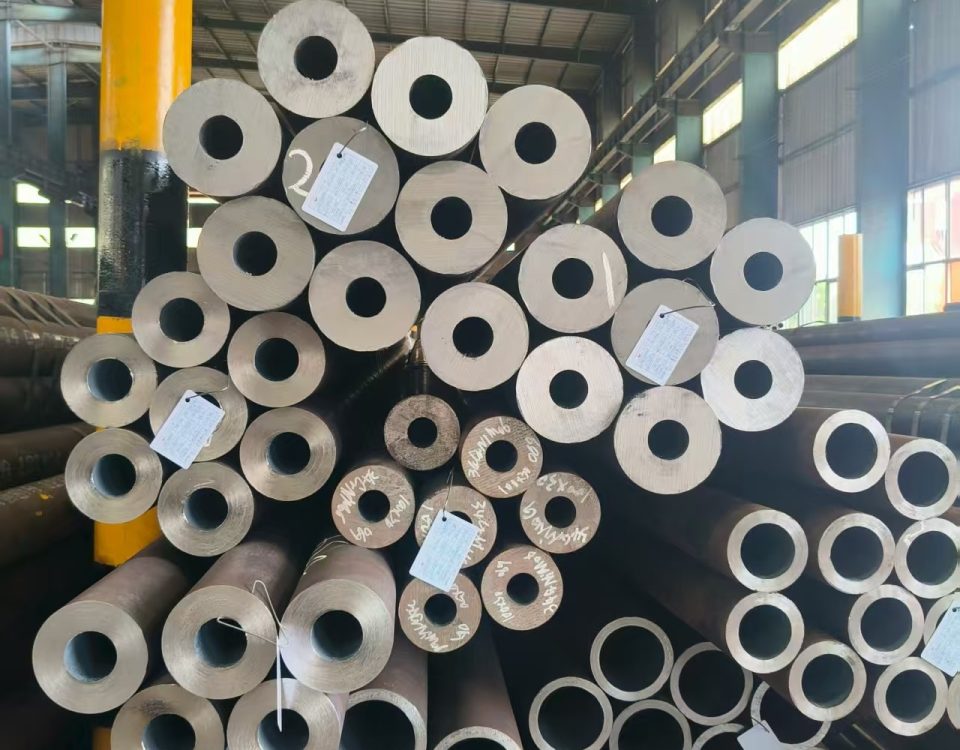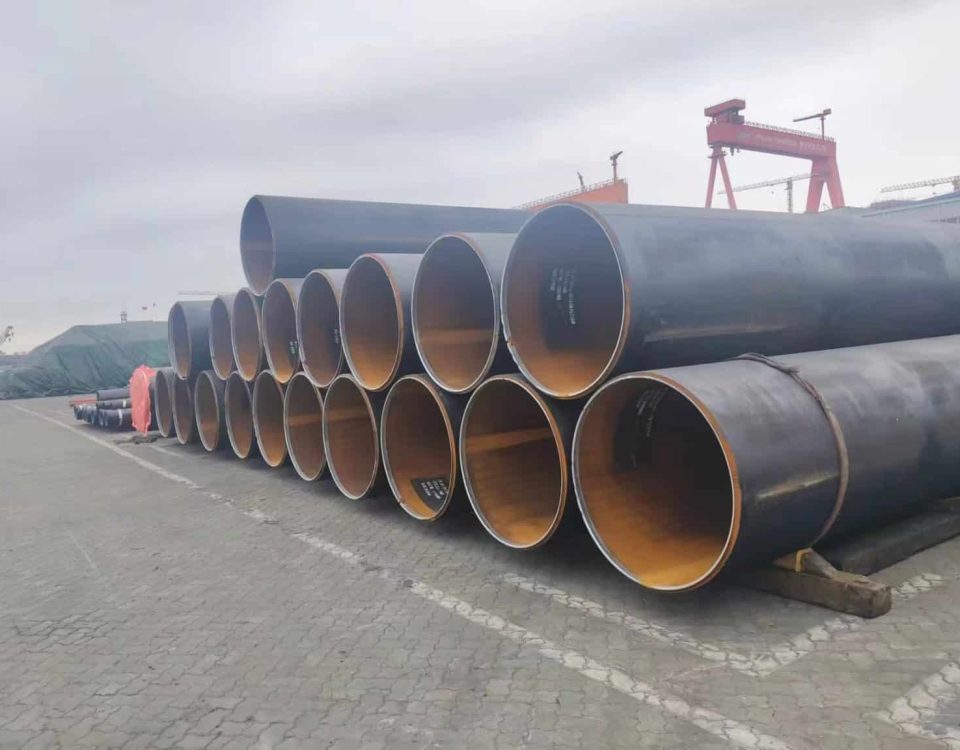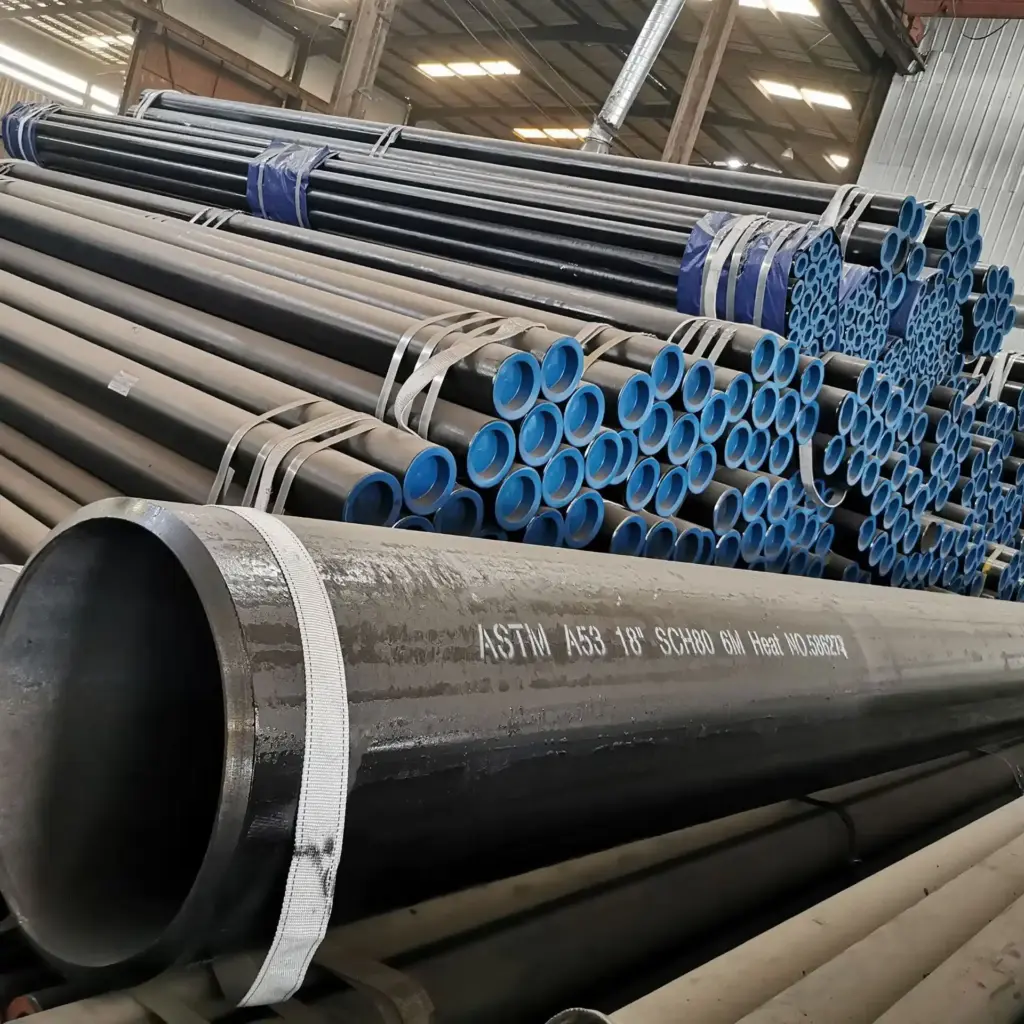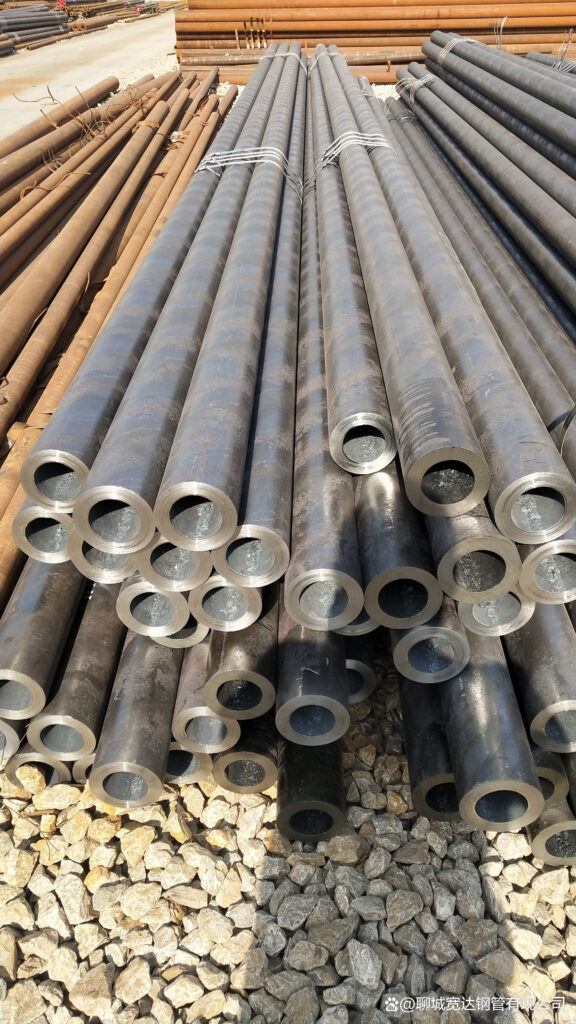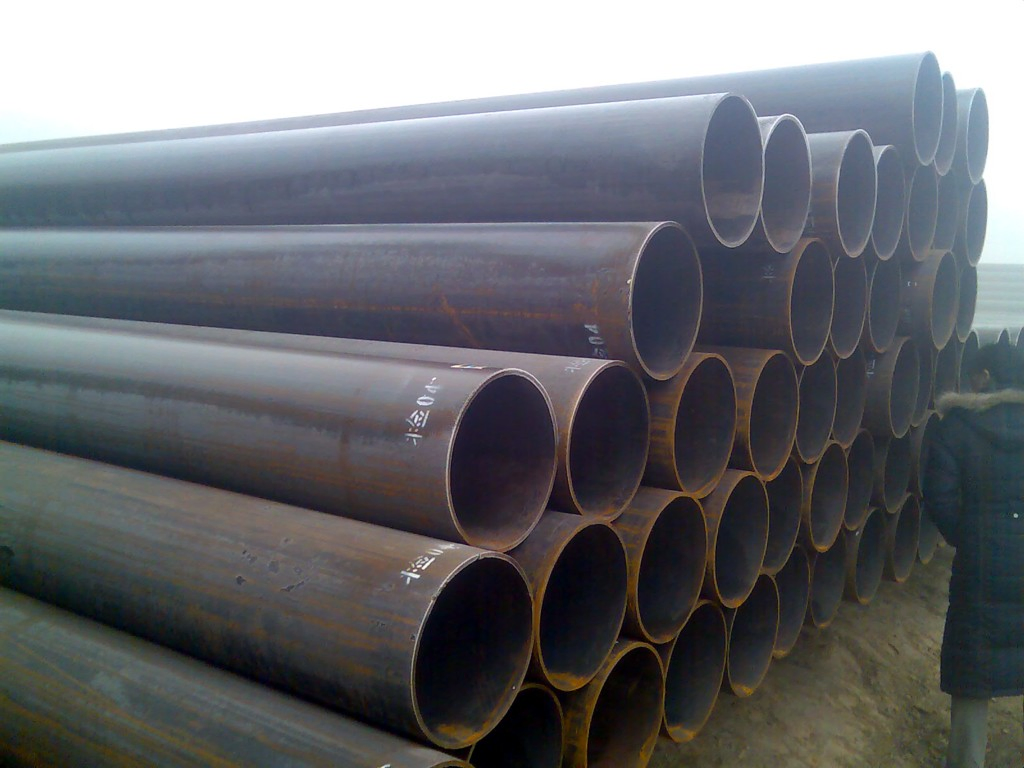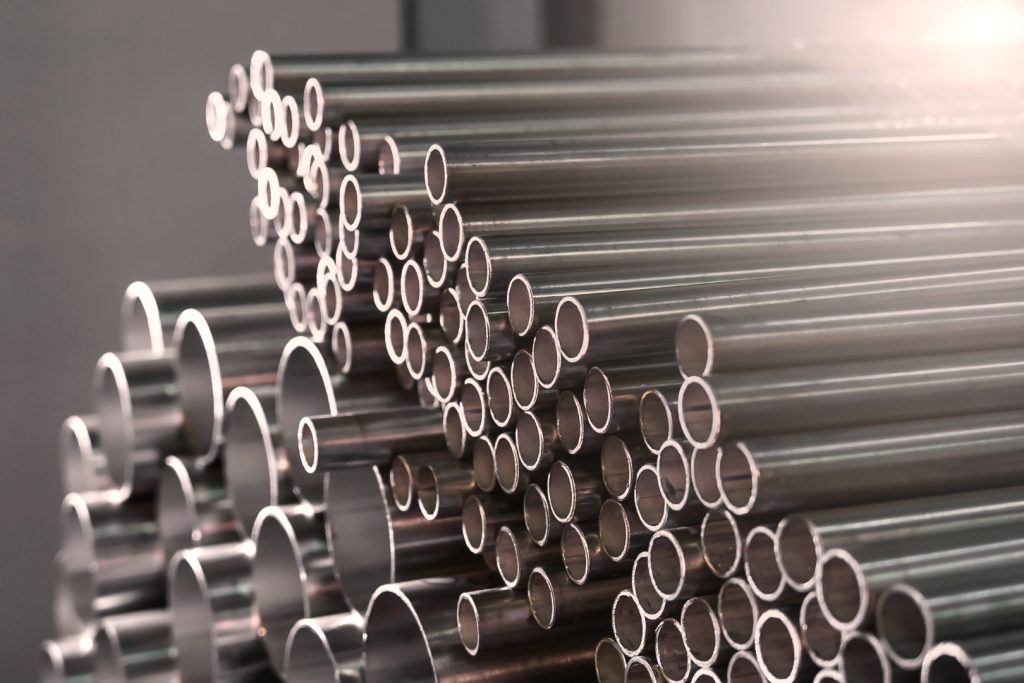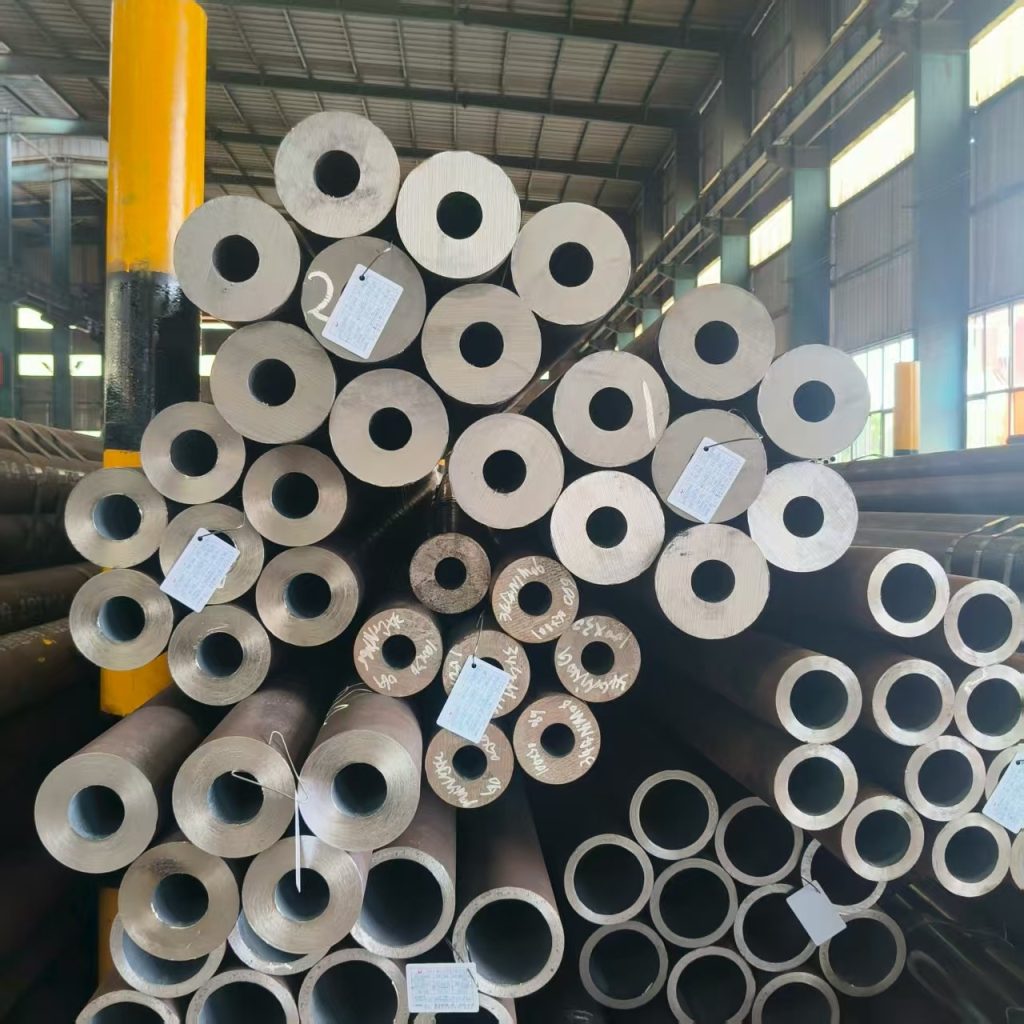
EN10297-1 Heavy Wall Seamless Steel Pipe
January 10, 2026
ASTM A709-50W Corten Weathering Steel Pipe
January 16, 2026
Internal Monologue: The Fluid Dynamics of Steel
When I sit down to dissect the ASTM A822 specification, I don’t just see a document from the American Society for Testing and Materials; I see the rigorous demands of fluid power systems. In hydraulic service, the pipe is not a passive conduit—it is a dynamic pressure vessel. My mind immediately goes to the “cold-drawn” requirement. Why cold-drawn? Because the precision of the inner diameter (ID) and the smoothness of the surface are the primary variables in laminar flow. If the ID is rough, you get turbulence; turbulence leads to heat; heat degrades the hydraulic oil; degraded oil destroys the pumps. It’s a cascading failure of physics.
ASTM A822 is unique because it emphasizes the “annealed” state. This isn’t just about making the steel soft; it’s about microstructural homogenization. I’m thinking about the dislocation density created during the cold-drawing process. When we pull a tube through a die and over a mandrel, we are essentially “packing” the lattice with defects. If we don’t properly anneal that steel, those defects become the nucleation points for fatigue cracks under the rhythmic pulsation of a hydraulic pump. In our mill, we don’t just anneal; we bright anneal in a controlled hydrogen atmosphere. I want to explore the chemistry of that—how avoiding oxygen at $900^\circ\text{C}$ prevents the formation of magnetite scale, leaving the ID “mirror-smooth.”
Then there’s the chemistry. ASTM A822 is a carbon steel spec, but the “invisible” elements—phosphorus and sulfur—are the villains here. High sulfur leads to stringers, which are catastrophic when a technician tries to flare the end of the pipe for a J514 fitting. If the steel has inclusions, it splits. My analysis needs to dive into the “clean steel” melting practices we employ—vacuum degassing and ladle refining—to ensure that when our customers bend or flare our pipes, the grain boundaries hold together. This is the difference between a system that lasts thirty years and one that leaks in thirty days.
The Engineering Paradigm of ASTM A822: Technical Analysis of High-Integrity Hydraulic Seamless Steel Pipe
In the realm of high-pressure fluid power, the structural integrity of the transmission lines is the definitive factor in system reliability. The ASTM A822 standard—Standard Specification for Seamless Cold-Drawn Carbon Steel Pipe for Hydraulic System Service—is the benchmark for pipes designed to operate under fluctuating pressures, extreme vibrations, and the uncompromising need for internal cleanliness. This article provides a comprehensive technical analysis of the metallurgical, mechanical, and manufacturing dimensions of ASTM A822, alongside the specialized production capabilities of our facility.
I. The Metallurgical Foundation: Chemistry and Microstructure
The performance of an ASTM A822 pipe begins in the electric arc furnace. Unlike structural tubing, hydraulic pipe requires a chemistry that balances strength with extreme ductility. The specification focuses on a low-to-medium carbon range to facilitate the cold-working processes and subsequent bending requirements.
Chemical Composition Analysis
The chemistry of ASTM A822 is intentionally “lean” to prevent the formation of hard martensitic phases during manufacturing or incidental welding.
| Element | ASTM A822 Composition (%) | Our Company’s Enhanced Control (%) | Technical Significance |
| Carbon (C) | 0.06 – 0.18 | 0.10 – 0.15 | Minimizes hardness while ensuring sufficient tensile strength. |
| Manganese (Mn) | 0.30 – 0.60 | 0.40 – 0.55 | Acts as a deoxidizer and increases hardenability slightly. |
| Phosphorus (P) | 0.040 max | $\le$ 0.015 | Prevents cold shortness and grain boundary embrittlement. |
| Sulfur (S) | 0.045 max | $\le$ 0.010 | Low sulfur is critical for prevent “stringers” that cause flaring cracks. |
| Silicon (Si) | – | 0.15 – 0.35 | Ensures fully “killed” steel for uniform density. |
By maintaining Phosphorus and Sulfur levels at a fraction of the allowable limit, our pipes exhibit isotropic properties, meaning the strength and ductility are nearly identical in both the longitudinal and transverse directions. This is vital when the pipe is subjected to the multi-axial stresses of a high-pressure hydraulic surge.
II. The Physics of the Cold-Drawn Process
The “Seamless Cold-Drawn” (SCD) designation in ASTM A822 is not merely a manufacturing method; it is a precision-enhancing treatment. Cold drawing involves pulling a hot-finished “hollow” through a tungsten carbide die and over a polished mandrel.
Dimensional Precision and Surface Finish
The cold-drawing process achieves three critical objectives that hot rolling cannot:
- Work Hardening: While the pipe is eventually annealed, the initial cold reduction refines the grain structure.
- Tolerances: We achieve OD and ID tolerances within $\pm 0.05\text{mm}$, ensuring a perfect fit with bite-type fittings and SAE flanges.
- Surface Smoothness: The drawing process “irons out” surface irregularities. In hydraulic systems, the Relative Roughness ($Ra$) of the ID is a primary determinant of the Reynolds number and the resulting pressure drop across the system.
Our facility utilizes boundary-layer lubrication technology during the draw, which results in an ID surface finish that often exceeds the requirements of the standard, reaching $Ra \le 1.6\mu\text{m}$. This smoothness minimizes the friction-induced heat in high-velocity oil lines.
III. Heat Treatment: The Science of the Annealed State
ASTM A822 mandates that the pipe be delivered in the annealed condition. The goal is to reach a “dead soft” state that allows for complex routing in tight engine bays or industrial manifolds.
Bright Annealing vs. Open Air Annealing
Most mills perform standard annealing, which creates a black oxide scale that must be removed via pickling. Our company utilizes Continuous Bright Annealing in a 100% Hydrogen ($H_2$) or cracked ammonia atmosphere.
- Zero Oxidation: Since no oxygen enters the furnace, the pipe emerges with a silver-bright finish.
- Internal Cleanliness: Traditional pickling can leave acid residue or “smut” inside a small-bore pipe. Bright annealing eliminates the need for aggressive chemical cleaning, ensuring that the hydraulic oil stays pure.
- Decarburization Control: Our atmosphere-controlled furnaces prevent “soft skin” (decarburization), ensuring the surface hardness remains consistent with the core.
IV. Mechanical Integrity and Safety Factors
Hydraulic systems are subject to “water hammer” and high-frequency pulsations. ASTM A822 pipe must be capable of absorbing these energy spikes without plastic deformation.
Table: Mechanical Property Requirements
| Property | ASTM A822 Requirement | Our Typical Values |
| Tensile Strength ($R_m$) | $\ge 310$ MPa (45 ksi) | 360 – 420 MPa |
| Yield Strength ($R_{eH}$) | $\ge 205$ MPa (30 ksi) | 240 – 280 MPa |
| Elongation ($A$ in 2″) | $\ge 35\%$ | 42 – 48% |
| Hardness (Rockwell B) | $\le 65$ HRB | 55 – 60 HRB |
The high elongation values of our pipes are particularly noteworthy. A 45% elongation means the pipe can be bent to a radius of $3 \times OD$ without thinning the outer wall beyond safety limits.
V. Testing and Quality Assurance: The Zero-Leak Mission
In hydraulic service, a single pinhole leak can lead to catastrophic failure or high-pressure injection injuries. Our testing protocol for ASTM A822 goes beyond the mandatory.
- Flattening and Flaring Tests: These are the “crucible” for seamless pipe. A sample is flared to 1.15 times its OD. If a single microscopic crack appears, the entire heat is rejected.
- Hydrostatic Testing: Every length of our pipe is tested to pressures often exceeding $300$ bar (depending on wall thickness), following the formula:
$$P = \frac{2St}{D}$$
Where $P$ = pressure, $S$ = allowable fiber stress, $t$ = wall thickness, and $D$ = outside diameter.
- Eddy Current Testing (ECT): We utilize 360-degree electromagnetic induction to detect sub-surface flaws that are invisible to the naked eye. This is standard on all our hydraulic lines.
- Internal Cleanliness (ISO 4406): We can supply pipes that meet specific NAS or ISO 4406 cleanliness classes, pre-capped with heavy-duty polyethylene plugs to prevent contamination during transit.
VI. Why Choose Our ASTM A822 Products?
Our company has positioned itself not just as a manufacturer, but as a strategic partner to the hydraulic industry.
- Integrated Production: From the melt shop to the cold-draw bench, we control the entire supply chain. This allows us to offer “Custom Chemistry” for particularly demanding offshore or aerospace applications.
- Superior ID Finish: Our proprietary mandrel lubricants and bright annealing process ensure an ID that is ready for high-performance servo-valves without further flushing.
- Extended Fatigue Life: Through precision straightening (using multi-roll cross-axis straighteners), we minimize the residual tensile stresses that lead to stress-corrosion cracking (SCC) in harsh environments.
- Global Compliance: While we manufacture to ASTM A822, our pipes simultaneously meet the requirements of DIN 2391 (ST37.4) and EN 10305-4 (E235N), providing a truly global product.
The Calculus of Containment: Pressure Ratings and Design Limits
To provide a definitive guide for the implementation of ASTM A822 in high-stakes environments, we must quantify the relationship between its physical dimensions and its resistance to internal force. The primary tool for this is Barlow’s Formula, which relates the internal pressure that a pipe can withstand to its dimensions and the strength of its material.
The Mathematical Framework
The theoretical burst pressure ($P_b$) is calculated as follows:
Where:
- $P_b$ = Burst Pressure (psi or MPa)
- $S$ = Minimum Tensile Strength of the material (for ASTM A822, $S \ge 310\text{ MPa}$ or $45,000\text{ psi}$)
- $t$ = Nominal Wall Thickness
- $D$ = Outside Diameter (OD)
To arrive at the Working Pressure (WP), we apply the 4:1 Design Factor ($DF$):
Technical Data Table: ASTM A822 Pressure Ratings (Metric)
The following table represents the calculated working pressures for our high-precision, cold-drawn ASTM A822 pipes. These values assume a standard operating temperature range ($-29^\circ\text{C}$ to $+38^\circ\text{C}$).
Table 4: Working Pressure Ratings (4:1 Safety Factor)
| Outside Diameter (mm) | Wall Thickness (mm) | Theoretical Burst (Bar) | Working Pressure (Bar) | Working Pressure (PSI) |
| 6.0 | 1.0 | 1033 | 258 | 3742 |
| 8.0 | 1.5 | 1162 | 291 | 4220 |
| 10.0 | 1.5 | 930 | 233 | 3379 |
| 12.0 | 2.0 | 1033 | 258 | 3742 |
| 16.0 | 2.5 | 969 | 242 | 3509 |
| 20.0 | 3.0 | 930 | 233 | 3379 |
| 25.0 | 4.0 | 992 | 248 | 3596 |
| 30.0 | 5.0 | 1033 | 258 | 3742 |
| 38.0 | 6.0 | 979 | 245 | 3553 |
| 50.0 | 8.0 | 992 | 248 | 3596 |
Note: These calculations are based on the minimum tensile strength of 310 MPa. Our actual production typically yields 15-20% higher values, providing an additional “buffer” for system surges.
Advanced Analysis: Factors Influencing Real-World Ratings
While tables provide a baseline, the “consciousness” of a hydraulic system is rarely static. Several variables can necessitate a derating of the values shown above.
1. Temperature Derating
As the temperature of the hydraulic fluid rises, the yield strength of the carbon steel begins to decrease. While ASTM A822 performs excellently up to $150^\circ\text{C}$, systems operating consistently above $100^\circ\text{C}$ should apply a derating factor.
2. The Impact of Bending
When a pipe is bent to fit into a chassis, the outer wall of the bend thins slightly ($t_{min}$). Our manufacturing process compensates for this by providing a highly uniform wall thickness with minimal eccentricity. However, we recommend that designers use the “minimum wall” value rather than the “nominal wall” when calculating for systems with tight-radius bends ($< 3 \times OD$).
3. Pulsation and Fatigue
In systems where the pressure cycles millions of times (e.g., injection molding machines), the Fatigue Limit becomes more important than the burst pressure. Carbon steel has a well-defined endurance limit—typically around 40-50% of its tensile strength. Because our cold-drawn pipes have a refined, homogenous grain structure, they offer superior resistance to fatigue crack initiation compared to lower-quality alternatives.
Beyond the Specification: Our “Clean-Sweep” Protocol
A pipe that meets ASTM A822 pressure ratings is useless if it introduces contaminants into a high-precision servo-valve. This is where our facility differentiates itself. We implement a Three-Stage Internal Cleanliness Protocol:
- High-Pressure Deionized Flush: After the bright annealing process, every pipe is flushed to remove any residual drawing lubricants or microscopic particulates.
- Laser Particle Counting: We conduct random sampling of the effluent from our pipes, measuring against ISO 4406 standards. We routinely achieve cleanliness levels of 15/13/10 or better.
-
Encapsulated Packaging: Each pipe is immediately capped with precision-fit, UV-resistant plugs and then shrink-wrapped in bundles to ensure that the environment of our mill is “locked in” until the pipe reaches your assembly floor.
Integrating ASTM A822 with Modern Fitting Technologies
The pipe is only half of the equation; the connection is the other. Our ASTM A822 pipes are engineered to be compatible with:
- SAE J514 Flare Fittings: The 35%+ elongation ensures a perfect 37-degree flare without thinning or splitting.
- Bite-Type (Compression) Fittings: The controlled surface hardness (Max 65 HRB) allows the fitting’s cutting ring to “bite” deeply and uniformly, creating a leak-proof seal even under high vibration.
- Orbital Welding: The low carbon equivalent (CE) of our steel makes it an ideal candidate for automated orbital welding, producing clean, slag-free joints for critical lines.
In the technical landscape of 2026, where systems are pushed to higher pressures and smaller footprints, the material of choice must be above reproach. ASTM A822, as produced in our facility, represents the marriage of 19th-century metallurgical principles with 21st-century precision. It is the result of a “stream of consciousness” in manufacturing—where every step, from the initial melt to the final laser marking, is an intentional act of quality.
The ASTM A822 seamless carbon steel pipe is the silent workhorse of modern industry. From the massive actuators on a deep-sea mining vessel to the precision steering of a combine harvester, the integrity of the hydraulic line is non-negotiable. By adhering to the strictest metallurgical controls and employing advanced bright-annealing technology, our company provides a product that ensures zero leaks, maximum flow efficiency, and an unparalleled lifecycle.
When you specify our ASTM A822 pipe, you are choosing a material that has been engineered at the molecular level to withstand the rigors of high-pressure service.We don’t just sell steel; we sell the assurance that when the pressure hits 4000 PSI, your system will remain silent, dry, and powerful.