Analysis of WP304 Stainless Steel Elbows Hot Bending Forming
January 18, 2026
When we talk about the API 5L X65QS (L450QS), we are moving beyond the realm of standard metallurgy and into the territory of high-stakes chemical defense. The “S” suffix is the soul of this material—it denotes Sour Service. In the deep-water engineering landscape, particularly for offshore projects involving high concentrations of $H_2S$, the pipe is not just a carrier of fluids; it is a sacrificial barrier against the insidious phenomenon of hydrogen-induced damage.
To write a deep technical analysis of this material, one must think about the atomic dance of hydrogen within a steel lattice. Imagine a pipeline on the ocean floor, under immense pressure, carrying “sour” crude. The $H_2S$ molecules dissociate at the steel surface. Atomic hydrogen, being the smallest of elements, doesn’t just sit there; it migrates into the grain boundaries of the X65 steel. If the steel isn’t perfectly clean, that hydrogen finds a void or an inclusion, recombines into $H_2$ gas, and builds internal pressure until the pipe literally unzips from the inside out. This is the existential threat that the X65QS is designed to conquer.
The Metallurgical Philosophy of the “QS” Designation
The “Q” stands for Quenched and Tempered. This is critical because a standard hot-rolled or normalized structure is too heterogeneous for sour service. By quenching and then tempering the steel, we create a refined, tempered martensite or acicular ferrite structure. This fine-grained consistency is the first line of defense. Large grains provide easy paths for crack propagation; fine grains create a labyrinth that slows it down.
However, the “S” is where the real science happens. The API 5L Annex H requirements for X65QS are brutal. It’s not just about strength; it’s about “cleanliness.” To make a pipe “anti-acid” and “anti-H2S,” the sulfur content must be pushed to near-zero levels—often less than 0.002%. Why? Because manganese sulfides ($MnS$) are the primary sites where Hydrogen Induced Cracking (HIC) begins. In traditional steel, $MnS$ inclusions are elongated like “stringers” during rolling. These stringers act as internal spearheads for cracks. In X65QS, we use Calcium Treatment to transform these sulfides into tiny, hard, spherical particles that don’t elongate. This is “inclusion shape control.”
Chemical Composition and the Carbon Equivalent Rigor
The chemical balance of X65QS is a tightrope walk. We need strength (X65 level), but we must limit the Carbon Equivalent (CE) to ensure the weldability and the hardness of the Heat Affected Zone (HAZ). If the hardness exceeds 22 HRC (250 HV10) anywhere in the pipe, the risk of Sulfide Stress Corrosion Cracking (SSCC) skyrockets.
The following table reflects the typical high-tier chemical requirements for the X65QS grade used in demanding subsea environments, emphasizing the ultra-low impurity thresholds.
| Element | API 5L PSL2 Requirement (%) | Typical X65QS Control (%) | Role in Sour Service |
| Carbon (C) | $\leq 0.16$ | 0.04 – 0.09 | Limits hardness and improves toughness |
| Manganese (Mn) | $\leq 1.45$ | 1.10 – 1.30 | Provides strength; kept low to avoid segregation |
| Silicon (Si) | 0.45 | 0.15 – 0.35 | Deoxidizer |
| Phosphorus (P) | $\leq 0.020$ | $\leq 0.010$ | Reduces grain boundary embrittlement |
| Sulfur (S) | $\leq 0.002$ | $\leq 0.001$ | Critical for HIC resistance |
| Copper (Cu) | $\leq 0.35$ | 0.20 – 0.30 | Beneficial for HIC resistance at low pH |
| Nickel (Ni) | $\leq 0.30$ | $\leq 0.25$ | Improves low-temp toughness |
| $Pcm$ (CE) | $\leq 0.22$ | $\leq 0.18$ | Ensures weldability without hardening |
The Mechanics of Resistance: HIC and SSCC Testing
When we analyze X65QS, we aren’t just looking at a tensile test. We are looking at the NACE (National Association of Corrosion Engineers) standards. To validate this pipe for offshore sour service, samples are submerged in a “NACE Solution”—a solution of 5% $NaCl$ and 0.5% $CH_3COOH$ saturated with $H_2S$ gas.
-
HIC Test (NACE TM0284): The pipe is exposed for 96 hours. We then slice it and look for cracks. We measure the Crack Length Ratio (CLR), Crack Thickness Ratio (CTR), and Crack Sensitivity Ratio (CSR). For X65QS, these numbers must be near zero.
-
SSCC Test (NACE TM0177): This is even more intense. A sample is put under a specific tensile load (usually 72% or 80% of its yield strength) and submerged in the $H_2S$ environment for 720 hours. If it snaps, the pipe fails. The X65QS is specifically tempered to ensure the dislocation density in the metal lattice is low enough that hydrogen atoms don’t get “trapped” and cause embrittlement.
Advanced Manufacturing: Seamless vs. The Environment
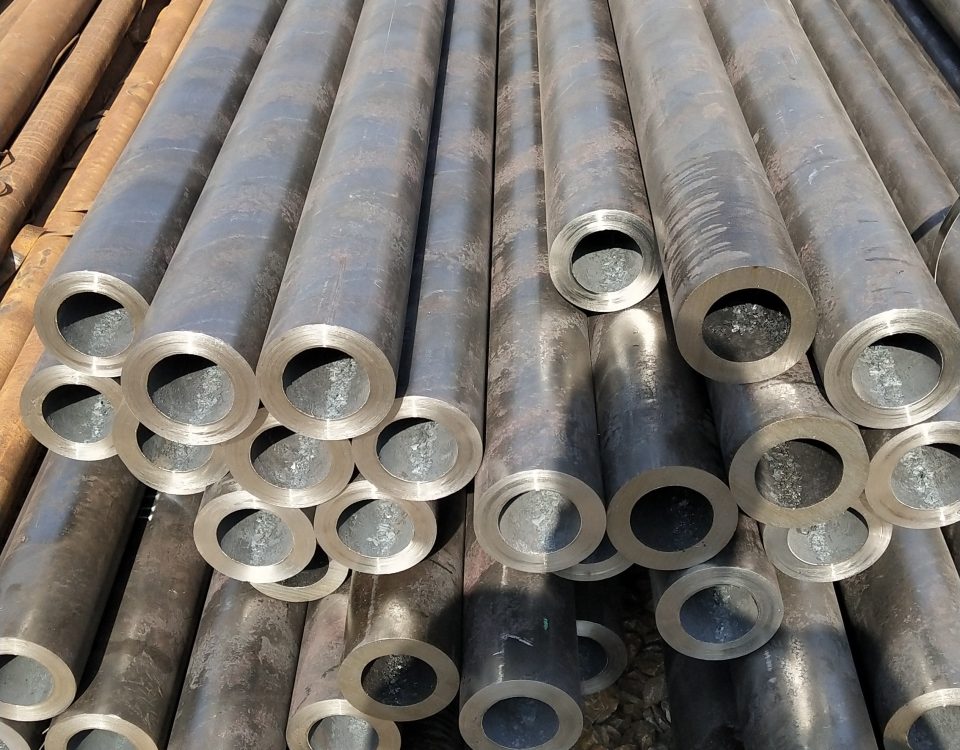
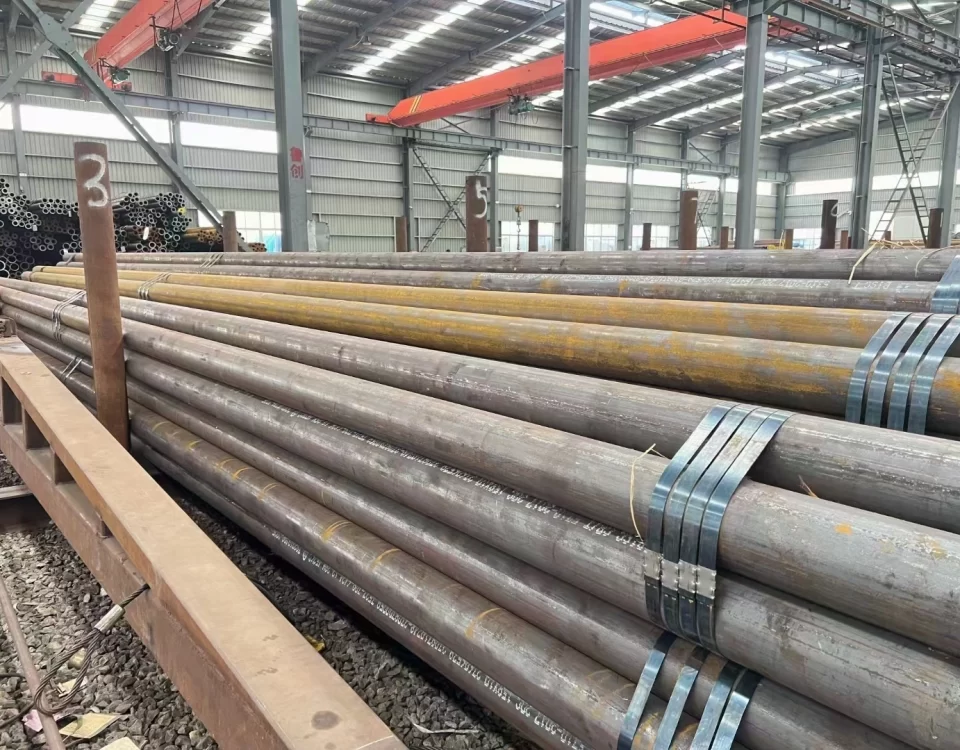
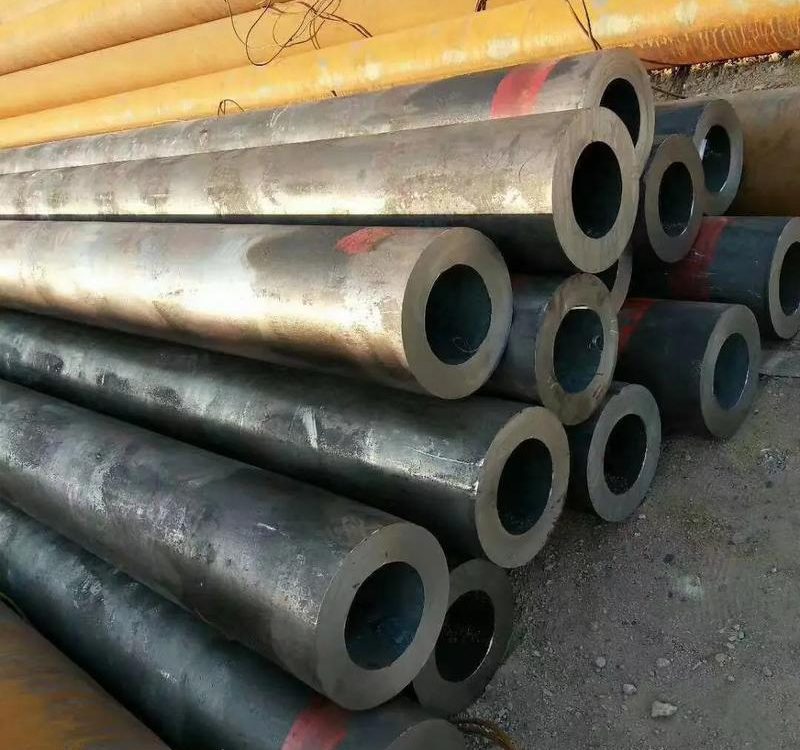
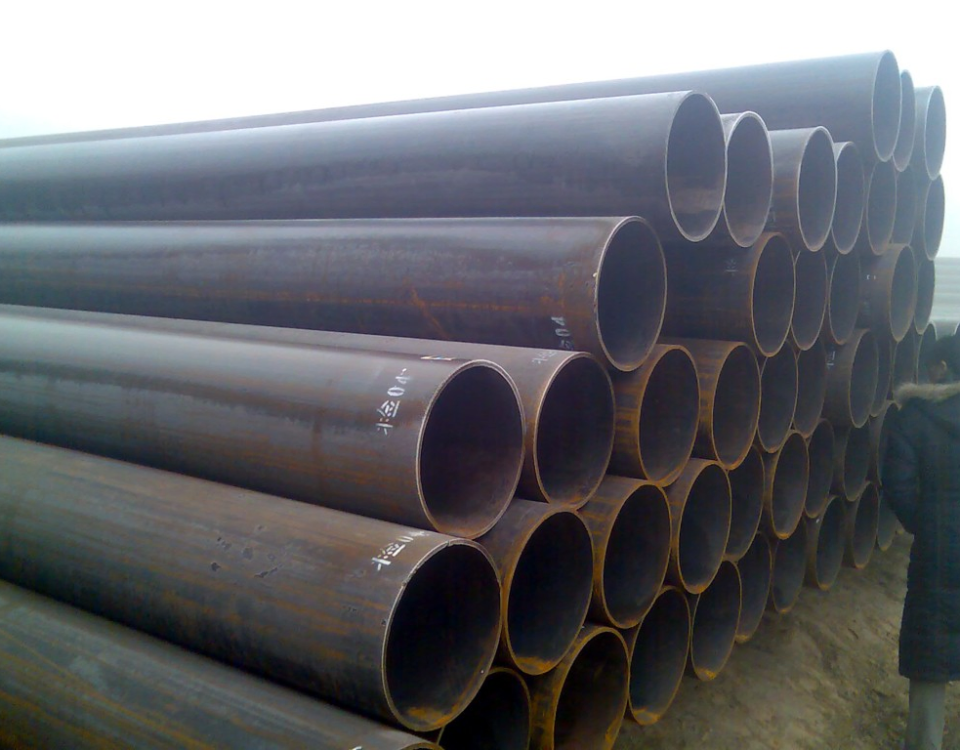
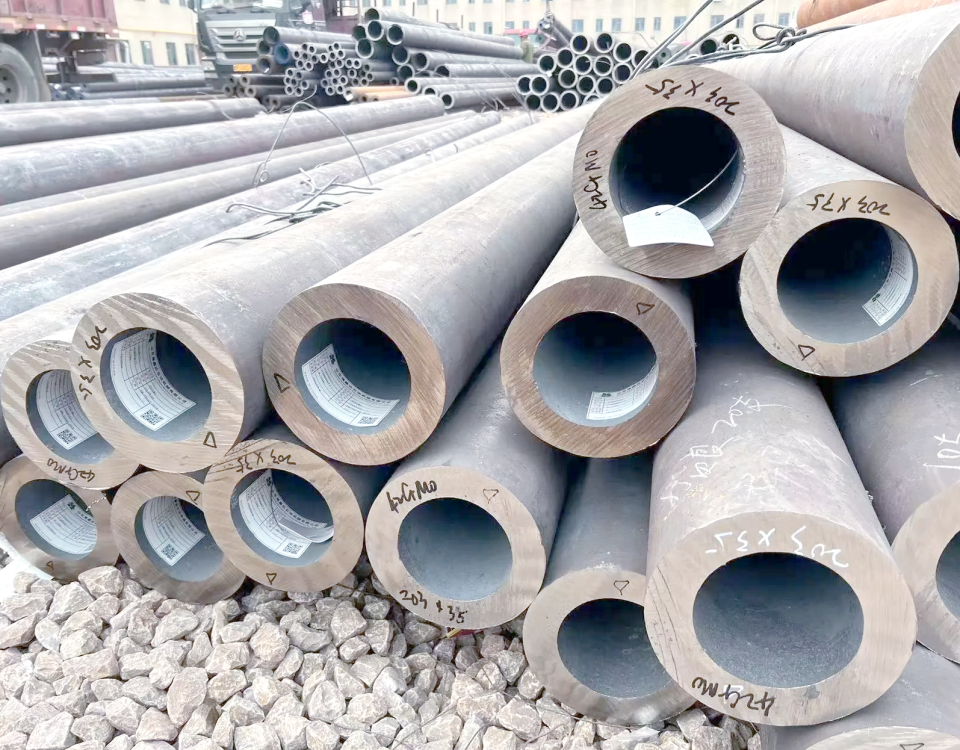
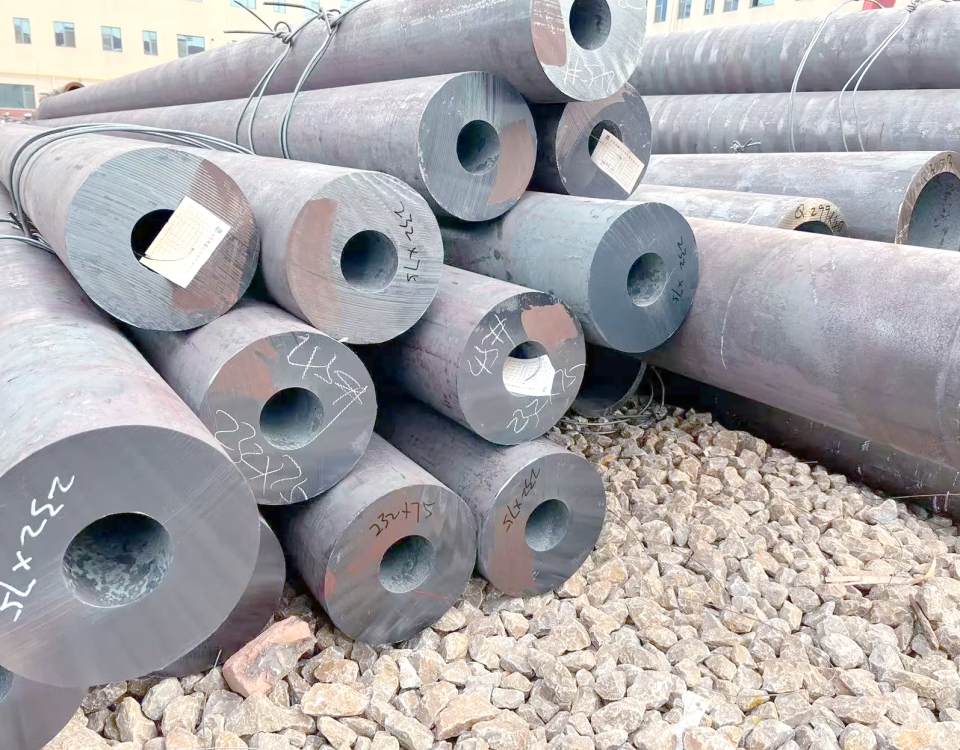
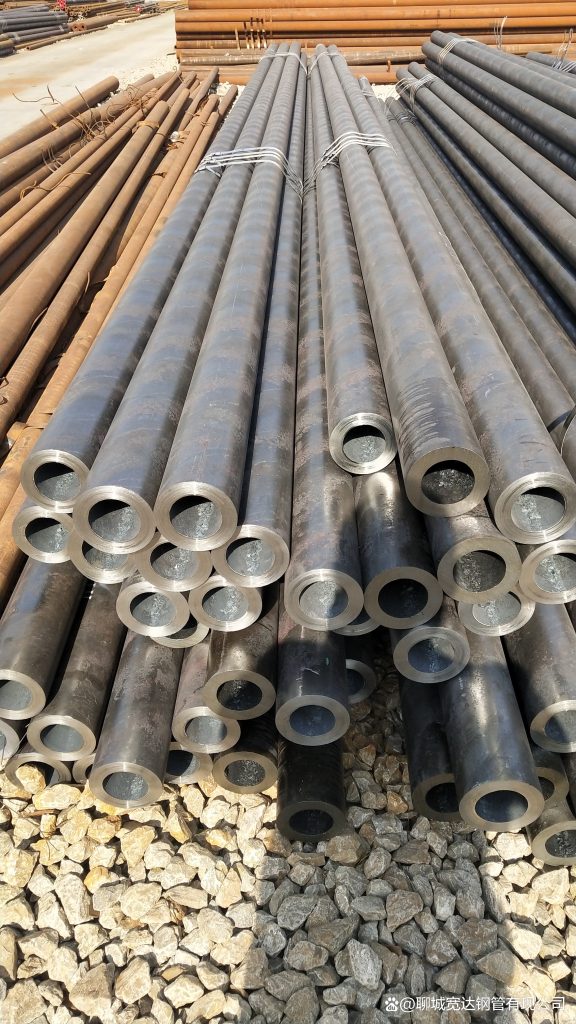
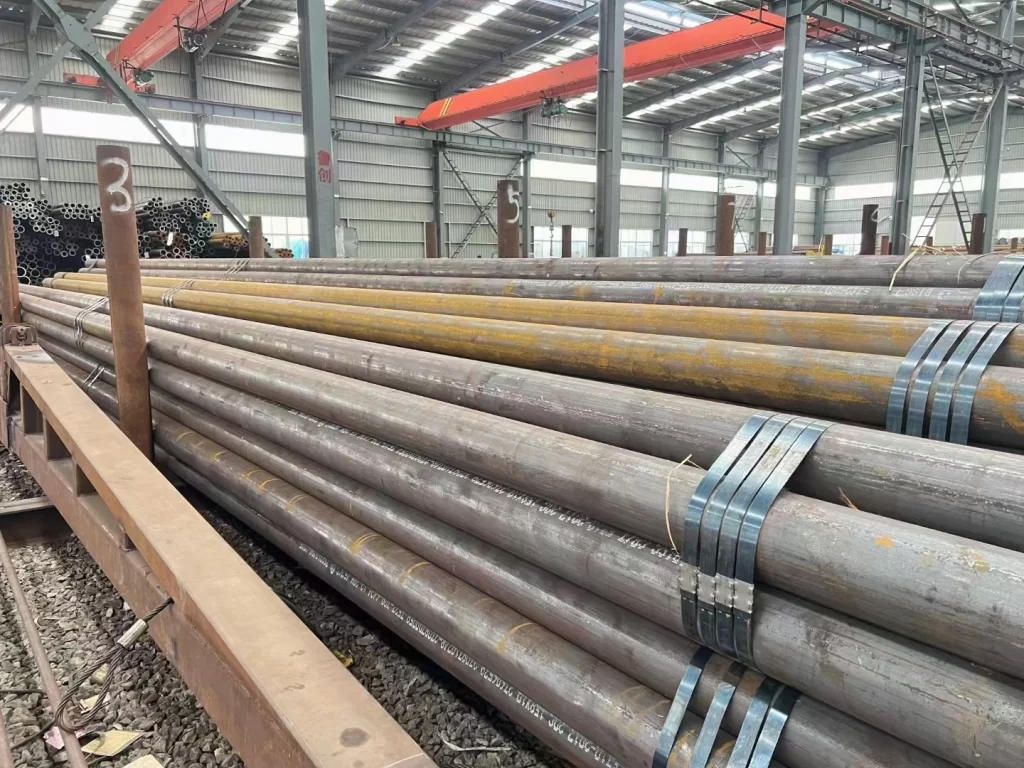
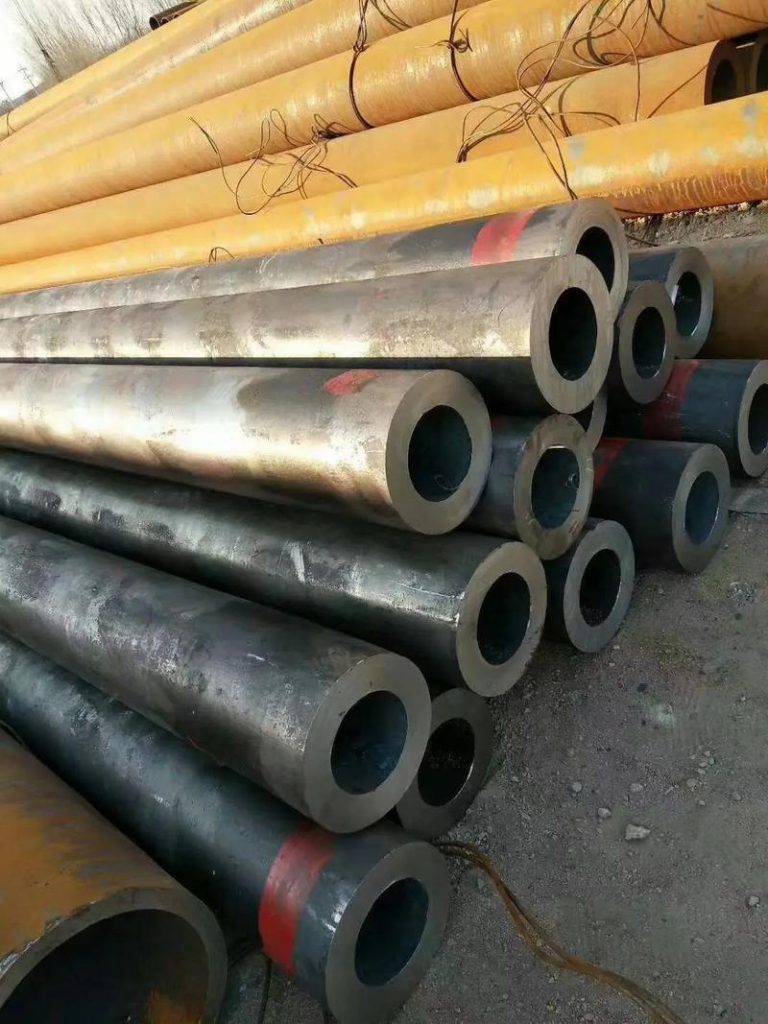
The choice of “Seamless” for X65QS is strategic. While modern welded pipes (SAWL/H) are high quality, the weld seam always represents a chemical and mechanical discontinuity. In an $H_2S$ environment, any micro-segregation of elements like Manganese or Chromium in the weld zone creates a “hard spot.” These hard spots are magnets for hydrogen. By using a seamless process—piercing a solid billet and then performing high-precision Quenching and Tempering—we achieve a circumferential uniformity that is simply safer for high-pressure sour gas transport.
From a structural perspective, X65QS must also manage the Bauschinger Effect. When pipes are cold-expanded or formed, their yield strength can actually drop when the direction of stress is reversed. In offshore engineering, where pipes are bent during “S-Lay” or “J-Lay” installation, the X65QS must maintain its mechanical stability.
Mechanical Benchmarks for X65QS (L450QS)
| Parameter | Value | Significance |
| Yield Strength ($R_{p0.2}$) | $450 – 600$ MPa | High strength for deep-water collapse resistance |
| Tensile Strength ($R_m$) | $535 – 760$ MPa | Structural integrity margin |
| Yield Ratio ($R_{p0.2}/R_m$) | $\leq 0.90$ | High plastic deformation capacity for bending |
| Impact Energy (Charpy V-Notch) | $\geq 100$ J (at $-40^{\circ}C$) | Extreme toughness to prevent brittle fracture |
| Hardness (Max) | $248$ HV10 / $22$ HRC | Mandatory ceiling to prevent SSCC |
The Evolution: Towards Digital Metallurgy and Sustainability
Looking forward, the research into X65QS is moving toward “Predictive Corrosion Modeling.” We are no longer just reacting to failures. We are using the chemical signatures of the oil (the “fingerprint” of the $H_2S$ and $CO_2$ levels) to calibrate the specific alloy mix of the pipe.
Furthermore, as the industry pivots toward Hydrogen transport, the X65QS is being studied as a candidate for $H_2$ pipelines. The very same properties that make it resistant to $H_2S$ (cleanliness, fine grain, low hardness) make it a prime candidate for the future hydrogen economy.
In conclusion, the API 5L X65QS seamless pipe is a masterpiece of metallurgical restraint. It is defined not by what is in the steel, but by what has been painstakingly removed (Sulfur, Phosphorus, Oxygen) and how the remaining atoms are organized. It is the silent, invisible guardian of the marine environment, ensuring that the toxic contents of our energy needs never touch the ocean floor.
The Internal Monologue of the Lattice: Why “Cleanliness” is a Survival Strategy
If I were to personify the X65QS pipe, its greatest fear wouldn’t be the crushing weight of two kilometers of seawater, but a single, microscopic stringer of Manganese Sulfide ($MnS$) lurking in its wall. In a “sour” environment ($H_2S$), the surface of the steel acts as a catalyst. The $H_2S$ molecule donates hydrogen atoms to the steel surface. Normally, these atoms would pair up to form $H_2$ gas and bubble away. However, the presence of sulfur or poisons like antimony actually inhibits this pairing, forcing the lone hydrogen atoms to tunnel into the iron lattice.
These atoms migrate until they find a “trap”—a void, a grain boundary, or an inclusion. This is where the HIC (Hydrogen Induced Cracking) begins. By enforcing the ultra-low sulfur requirement ($\leq 0.001\%$), we aren’t just following a rule; we are removing the “landing pads” for hydrogen. The use of Calcium treatment to achieve Inclusion Shape Control is a work of microscopic art. By transforming sharp-edged, elongated sulfides into hard, spherical calcium-aluminates, we ensure that even if hydrogen finds a particle, there are no sharp “stress risers” to initiate a crack.
The Fracture Mechanics of the Heat-Affected Zone (HAZ)
One cannot discuss X65QS without discussing the weld. Even though the pipe is seamless, it will eventually be girth-welded to another pipe on a lay-barge. This weld is the most vulnerable point in the entire subsea infrastructure. During welding, the rapid heating and cooling create a “quench” effect, potentially forming brittle martensite in the HAZ.
For sour service, if the local hardness in the HAZ exceeds 248 HV10, the steel becomes susceptible to SSCC (Sulfide Stress Corrosion Cracking). This is a synergistic failure where the combination of tensile stress (from the internal pressure or the weight of the pipe string) and the $H_2S$ environment causes the steel to crack at stresses far below its yield strength.
To mitigate this, the X65QS uses a low-carbon, high-manganese micro-alloying strategy. By keeping carbon low and using tiny amounts of Niobium (Nb) and Vanadium (V), we can achieve X65 strength without the need for high carbon levels that would otherwise make the weld area brittle.
| Micro-Alloying Element | Range (%) | Technical Justification |
| Niobium (Nb) | $0.02 – 0.05$ | Fine-tunes grain size during the rolling/piercing stage. |
| Vanadium (V) | $0.01 – 0.06$ | Provides precipitation hardening without hurting weldability. |
| Titanium (Ti) | $0.01 – 0.02$ | Pins grain boundaries at high temperatures during welding. |
| Nitrogen (N) | $\leq 0.008$ | Minimized to prevent brittle nitride formations. |
The Dimensional “O” in the “QS” Equation: Collapse Resistance
While “S” stands for Sour, the “Q” (Quenched) process also provides the geometric perfection required for deep-water service. In deep-sea engineering, the primary failure mode is often Hydrostatic Collapse. A pipe’s resistance to collapse is governed by its Ovality and its Residual Stress.
In a seamless X65QS pipe, the quenching process is done vertically or while the pipe is rotating to ensure uniform cooling. This minimizes the “out-of-roundness.” If a pipe is even 1% oval, its collapse resistance can drop by 30%. Because X65QS is a PSL2 (Product Specification Level 2) grade, the tolerances are much tighter than standard plumbing pipes.
Advanced Testing: The “96-Hour” and “720-Hour” Gauntlets
To prove a pipe is truly “Anti-Acid” (抗酸), we subject it to the NACE TM0284 (HIC) and NACE TM0177 (SSCC) tests.
-
In the HIC test, we look for Stepwise Cracking. Hydrogen atoms recombine into $H_2$ gas at inclusions, building up pressures that can exceed several thousand PSI, literally blowing the steel apart from the inside.
-
In the SSCC test, the “Four-Point Bend” or “Tensile Proof Ring” test is used. We simulate the worst-case scenario: a pipe bent over a reef, under maximum pressure, carrying the most corrosive gas imaginable. If the X65QS survives 720 hours (30 days) in this “hell,” it is deemed fit for a 25-year design life.
Conclusion: The Silent Guardian of the Depths
The API 5L X65QS is the pinnacle of carbon steel technology. It represents a transition from “brute force” metallurgy to “molecular precision” engineering. By controlling the impurities at the parts-per-million level and tailoring the microstructure through Quench and Tempering, we create a vessel that can withstand the chemical aggression of $H_2S$ and the physical aggression of the deep ocean.
As we look toward the future, the research is now focusing on CO2-H2S mixed service (Sweet-Sour service), where we must manage both the hydrogen embrittlement of $H_2S$ and the weight-loss corrosion of $CO_2$. This requires the addition of Chromium (around 0.5% to 1.0%) to the X65QS chemistry to form a protective siderite scale.