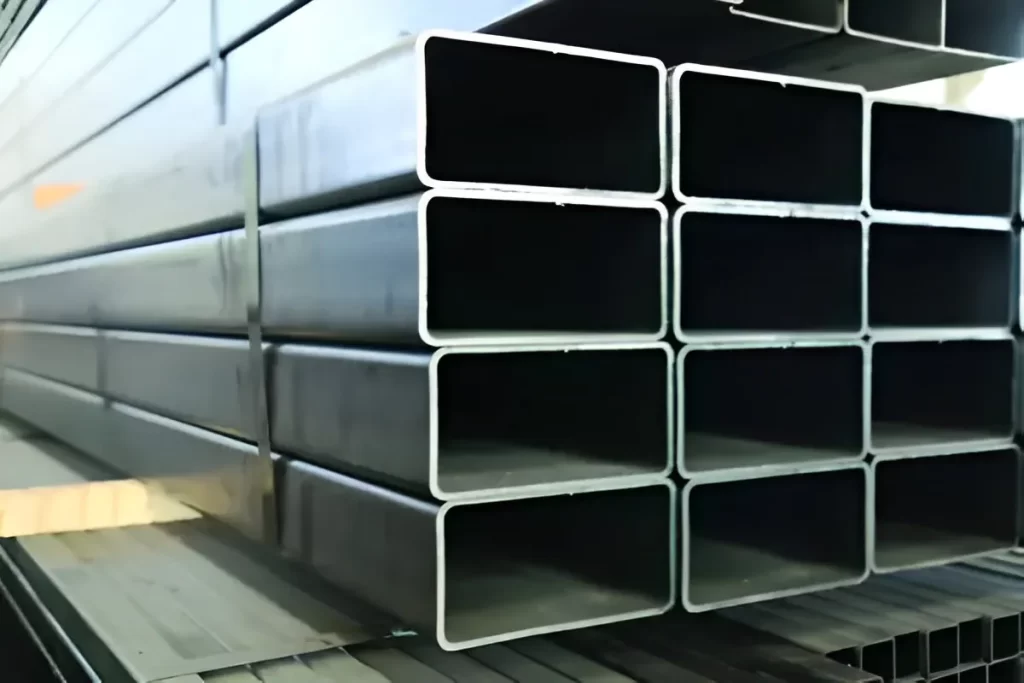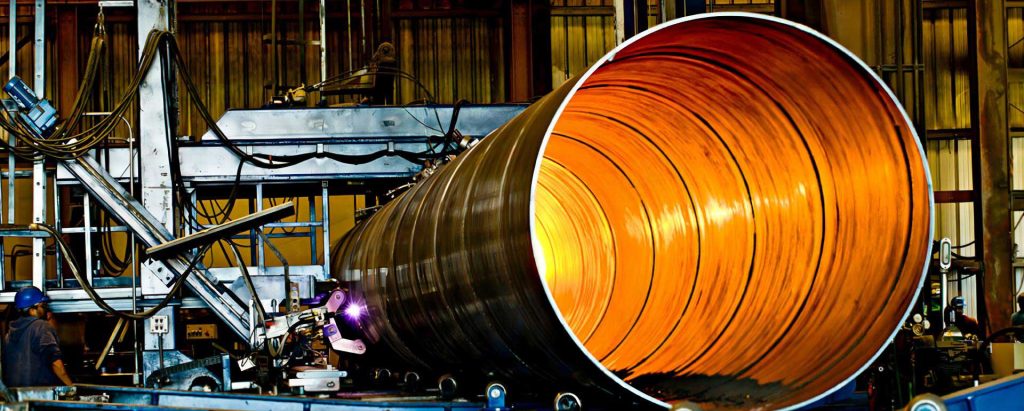
Heavy Wall Thickness SCH 160 Seamless Steel Pipe
November 28, 2025
Bimetallic Corrosion-Resistant Alloy Lined Composite Steel Pipe
December 5, 2025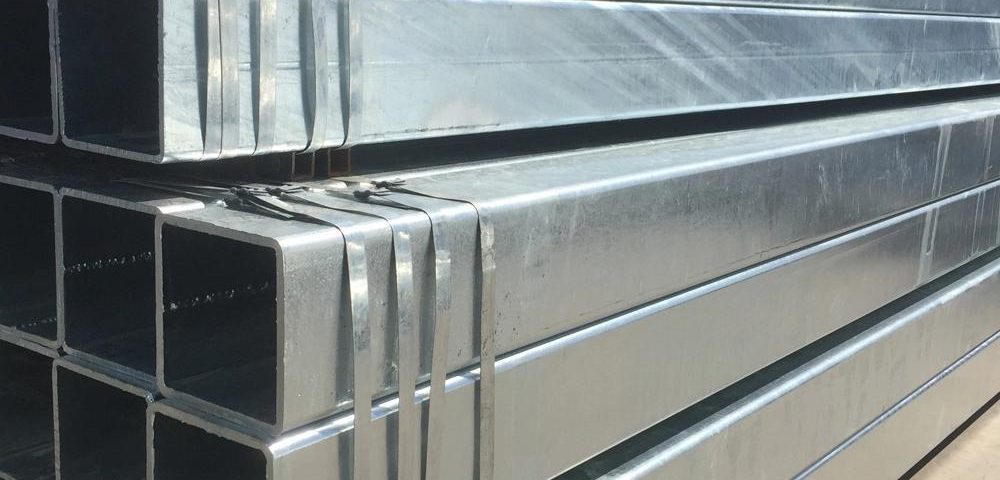
The Galvanized Sentinel: A Deep Exploration of the Zinc-Coated Square Structural Hollow Section (SHS) as the Backbone of Resilient Infrastructure
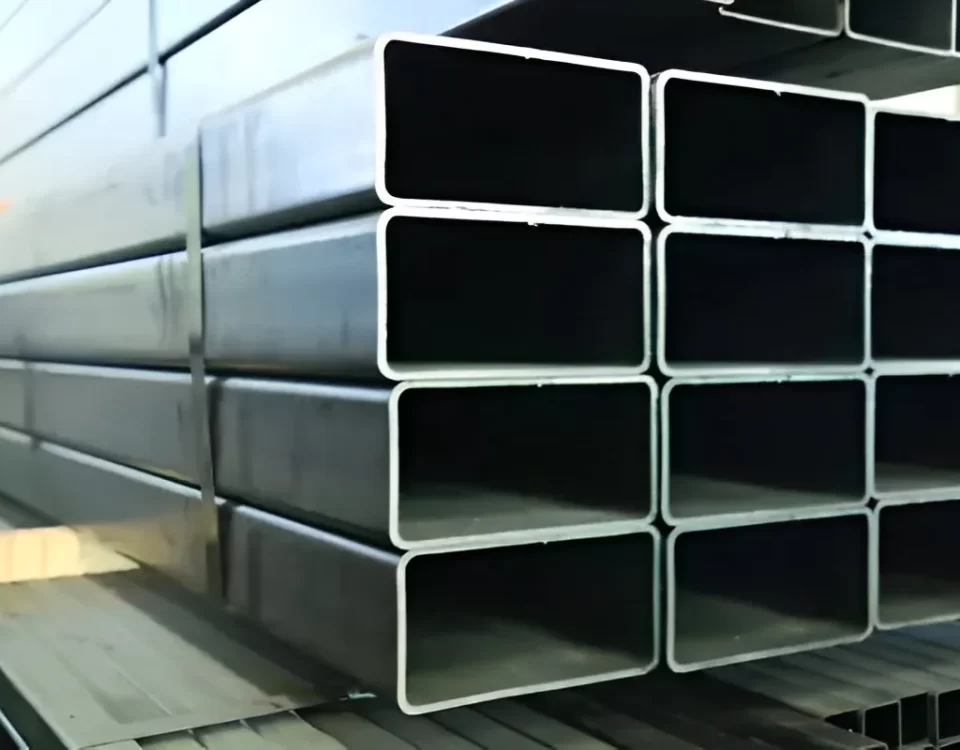
The modern construction and heavy industrial landscape is characterized by a relentless demand for materials that simultaneously offer superior structural performance and resistance to environmental degradation. In this critical intersection, the Galvanized Steel Square Hollow Section (SHS) emerges as a technically sophisticated solution, representing a convergence of efficient structural geometry with an advanced, sacrificial corrosion protection system. This product is far more than a simple steel tube; it is a meticulously engineered component, whose design adheres to a complex, overlapping matrix of global standards—from ASTM and API for mechanical properties and dimensions, to EN and ISO for cold-forming and coating requirements. The challenge in understanding the true value of the galvanized SHS lies in appreciating the synergistic relationship between its closed, geometrically efficient cross-section and the sacrificial electrochemistry of its external zinc coating.
The rationale for selecting the SHS shape is deeply rooted in principles of mechanics. Unlike open sections (such as I-beams or channels), the closed box section maximizes the moment of inertia for a given cross-sectional area, yielding exceptional strength-to-weight ratios. This intrinsic efficiency makes the SHS ideal for structural applications where weight minimization and resistance to multi-directional loading are paramount. When this structural prowess is combined with the longevity afforded by galvanization—the application of a zinc layer designed to corrode preferentially to the underlying ferrous substrate—the resulting component becomes the definitive choice for exposed, humid, or aggressive environments in mining, construction, transmission, and general civil infrastructure. The exhaustive list of applicable standards—ranging from structural codes like ASTM A500 and EN 10219 to coating specifications like DIN 2444 and ISO 1461—underscores the necessity of manufacturing this product under stringent, traceable control to satisfy the diverse and critical needs of a global clientele.
1. The Synergy of Shape and Strength: SHS Mechanics and Structural Efficiency
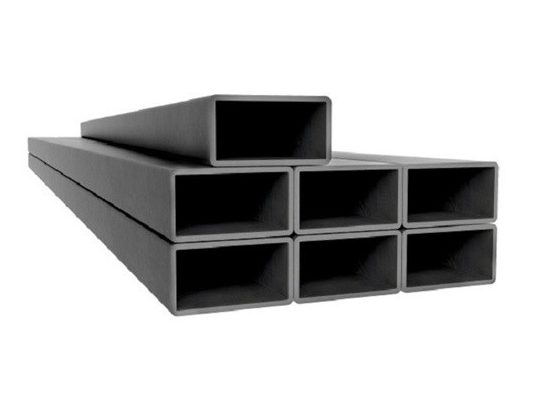
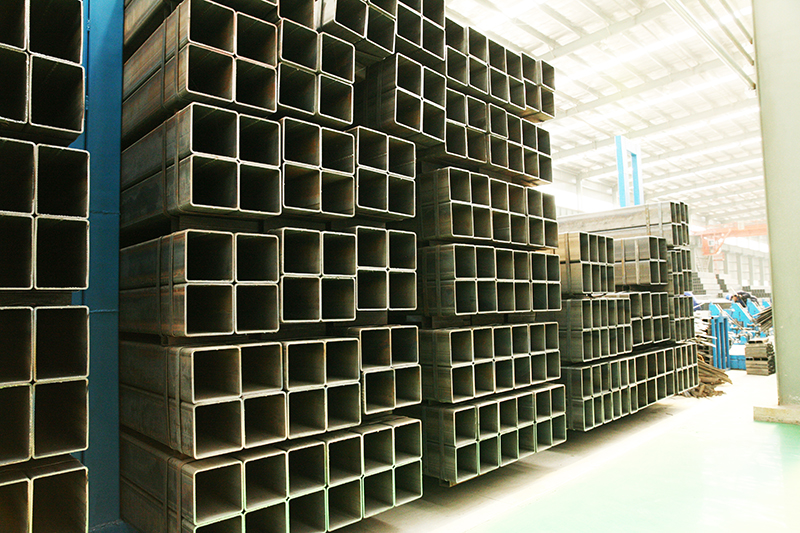
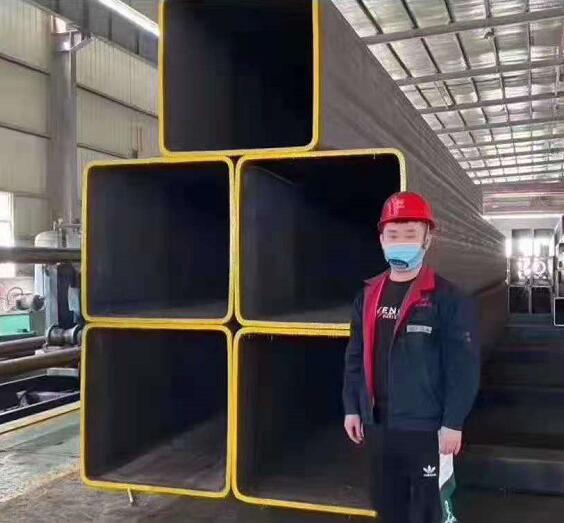
The selection of a Square Hollow Section (SHS) over a Circular (CHS) or an open section is an engineering decision based on optimizing material distribution against anticipated structural loads. The SHS is a prime example of a geometry that provides maximum stiffness and load-bearing capacity with minimal material usage.
Geometric Advantage and Torsional Resistance
In structural engineering, efficiency is often measured by the component’s resistance to buckling, bending, and torsion. For a given amount of steel, the closed, symmetrical square section inherently offers superior performance against torsional forces compared to open sections. When an I-beam is subjected to twisting, its thin flanges are susceptible to warping, leading to a high shear stress concentration and rapid failure; conversely, the continuous wall of the SHS creates a highly effective torque box. This characteristic is invaluable in applications like transmission towers, rigid frames, and bridge railings, where wind loading or dynamic forces introduce significant twisting moments. The inherent symmetry of the square section also simplifies connection design and ensures predictable performance under bending loads applied in any plane, eliminating the need to orient the section based on the direction of the primary load.
The manufacturing process for SHS dictates its final properties. These sections are typically produced via Cold-Forming from hot-rolled coil. The flat strip is progressively shaped into the square profile before the edges are joined by continuous electric resistance welding (ERW) or submerged arc welding (SAW). The cold-forming process introduces strain hardening to the steel, particularly in the corner regions, which marginally increases the yield strength of the finished product, a factor often accounted for in standards like ASTM A500. This process necessitates strict control over the base material’s ductility (Grades Q235, Q345, Gr. B/C), ensuring the steel can withstand the severe plastic deformation required for forming the tight corner radii without cracking or developing undesirable residual stresses that could later compromise the zinc coating integrity.
Tensile and Yield Requirements in Structural Grades
The base material grades used for galvanized SHS fall within the medium-to-high strength structural category, guaranteeing adequate support for substantial static and dynamic loads. Grades like Q345 (Chinese standard, approximately $345 \text{ MPa}$ yield strength) and C350 (Australian/New Zealand structural standard, $350 \text{ MPa}$ yield strength) are particularly popular for their excellent weldability combined with high strength.
The structural standards, such as ASTM A500 (particularly Grade C and D for welded structural tubing) and EN 10219 (Cold-Formed Welded Structural Hollow Sections), impose stringent requirements that link the shape and thickness to the minimum required yield and tensile strengths. A typical requirement demands a minimum tensile strength $R_m$ of $450 \text{ MPa}$ and a minimum yield strength $R_{eH}$ of $345 \text{ MPa}$ for the higher grades. The ratio between the yield strength and the tensile strength ($R_{eH}/R_m$) is meticulously controlled to ensure that the steel exhibits sufficient ductility before rupture, a crucial safety feature that allows structural deformation (warning) prior to ultimate collapse. The dimensional specification for SHS includes not only the overall size and wall thickness, but also the corner radius, which is tightly controlled to balance the benefits of strain hardening against the potential for corner cracking during the cold-forming process. The external corner radius must comply with the requirements, typically being no more than $2.0$ to $3.0$ times the wall thickness, to ensure both structural performance and optimal coating coverage during subsequent galvanization.
| Grade Category | Representative Grades | Minimum Yield Strength (ReH) | Minimum Tensile Strength (Rm) | Standard Application Focus |
| Basic Structural | Q235, Gr.A, C250 | $235-250 \text{ MPa}$ | $370-410 \text{ MPa}$ | General Purpose, Low-Stress Frameworks |
| High Structural | Q345, Gr.B/C, C350 | $345-355 \text{ MPa}$ | $450-480 \text{ MPa}$ | High-Rise Construction, Load-Bearing Columns |
| Pipeline/Fluid | API 5L Gr. B, ASTM A53 | $240 \text{ MPa}$ | $415 \text{ MPa}$ | Conduits, Low-Pressure Fluid Transfer (when galvanized) |
2. The Zinc Shield: Metallurgy and Sacrificial Corrosion Protection
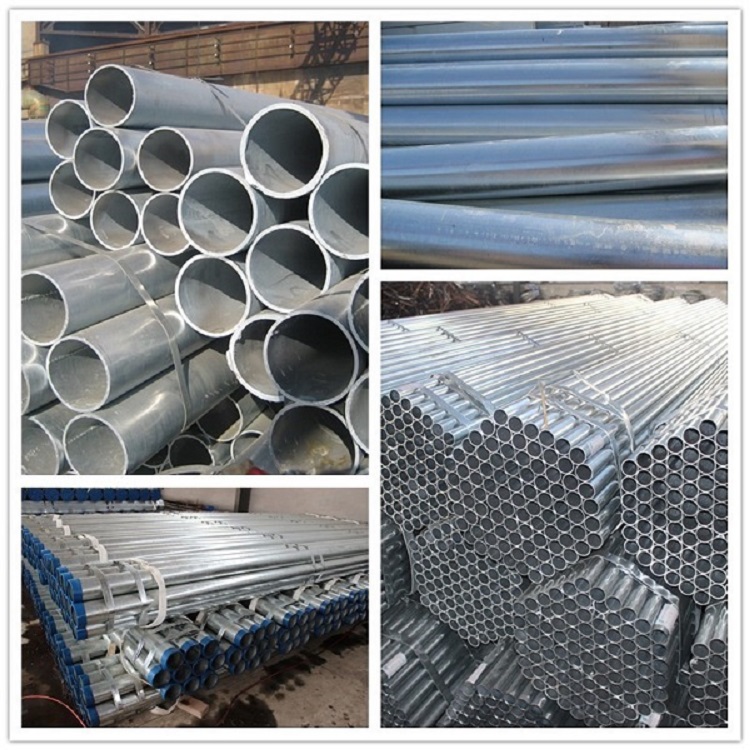
The defining feature of this product—its galvanization—transforms it from a standard structural component into a low-maintenance, high-durability asset. This corrosion protection is achieved via the application of a metallic zinc coating, typically through the Hot-Dip Galvanizing process, which is the most effective method for long-term protection of fabricated steel.
The Science of Hot-Dip Galvanizing and Interfacial Layers
Hot-dip galvanizing involves immersing the pre-cleaned, fabricated steel component into a bath of molten zinc (held at approximately $450^{\circ}\text{C}$). This high-temperature immersion triggers a metallurgical reaction between the iron (Fe) in the steel substrate and the liquid zinc (Zn), resulting in the formation of a series of highly durable, intermetallic iron-zinc alloy layers. These layers are critical to the coating’s functionality:
-
Gamma ($\Gamma$) Layer: The innermost layer, adjacent to the steel, is the hardest, with high iron content ($\sim 21-28\% \text{ Fe}$). Its formation ensures a tenacious bond between the coating and the steel substrate.
-
Delta ($\delta_1$) Layer: The next layer, characterized by a more columnar crystal structure and a lower iron content ($\sim 10\% \text{ Fe}$), contributes significantly to the hardness and abrasion resistance of the coating.
-
Zeta ($\zeta$) Layer: A primary component of the coating thickness, this layer is often the thickest alloy layer and contributes substantially to the coating’s mechanical properties.
-
Eta ($\eta$) Layer: The outermost layer is composed of pure zinc ($\sim 0\% \text{ Fe}$) and is relatively soft and ductile. This pure zinc layer provides the immediate, visible corrosion resistance and allows the coating to absorb minor impacts without cracking.
This stratified, metallurgical bond provides superior adhesion and resistance to mechanical damage compared to simple paint or electroplated coatings. The thickness of these layers, and thus the total coating weight, is specified by standards such as ISO 1461 and ASTM A123, measured in grams per square meter ($\text{g}/\text{m}^2$) or mils. The required coating thickness is dictated by the expected service environment’s corrosivity, with thicker coatings specified for highly aggressive industrial or marine atmospheres.
The Sacrificial Principle and Corrosion Longevity
The true genius of the zinc coating lies in the sacrificial (cathodic) protection principle. When the zinc layer is breached—due to scratches, impact, or drilling holes—and the underlying steel is exposed to the corrosive electrolyte (moisture, rain, humidity), the zinc, being a less noble metal than iron, becomes the sacrificial anode. The zinc corrodes preferentially, generating a protective current that inhibits the corrosion of the exposed steel (the cathode). This process continues until all the zinc in the immediate vicinity of the breach is consumed, thus providing an unparalleled self-healing capability that ensures the integrity of the structure even after minor damage.
The longevity of the galvanized coating is directly proportional to its thickness and inversely proportional to the local corrosion rate (often measured in $\mu\text{m}$ of zinc consumed per year). In a typical rural environment, service life can exceed 70 years, while in highly aggressive marine or industrial zones, the life may be reduced but is still far superior to ungalvanized or painted steel, leading to massive savings in maintenance and repainting costs over the life cycle of the structure.
Metallurgical Factors Influencing Galvanization (The Sandelin Effect)
The chemical composition of the base steel, particularly the content of Silicon (Si) and Phosphorus (P), is critical to the galvanizing process. High levels of these elements can accelerate the iron-zinc reaction, leading to the rapid growth of the iron-zinc alloy layers. This phenomenon, known as the Sandelin Effect, can produce an overly thick, dull gray, and potentially brittle coating that is susceptible to flaking. Therefore, the specification for structural grades destined for galvanization, such as Q345, often includes restrictions on silicon content to ensure the final zinc coating is ductile, shiny, and adheres optimally, meeting the aesthetic and mechanical demands of the final structure. This tight control is why the chemical composition requirements for galvanizing grades are often stricter than for general structural steel.
3. Navigating the Global Regulatory Maze: Standards and Specifications
The extensive list of applicable standards—encompassing structural, fluid, and coating requirements across multiple continents—is a testament to the global application and inherent versatility of the galvanized SHS. Manufacturers must demonstrate an integrated compliance strategy to certify a single product under this diverse regulatory framework.
Structural and Dimensional Compliance (A500 vs. EN 10219)
The foundational standards for the hollow section’s geometry and mechanical performance are ASTM A500 (North America) and EN 10219 (Europe).
-
ASTM A500: Focuses primarily on the required mechanical properties, defining Grades A, B, C, and D with increasing yield strength. It includes specific requirements for the outside corner radii, straightness, and, importantly, twist—the rotational deviation along the length of the section, which must be tightly controlled for aesthetic and connection accuracy in structural applications.
-
EN 10219: Primarily covers cold-formed welded structural steel, providing comprehensive dimensional tables for square and rectangular sections. It meticulously specifies tolerances for wall thickness (WT), overall size, straightness, and non-squareness of the corners. Compliance with EN 10219 ensures that the SHS meets the rigorous dimensional uniformity required for structural welding and bolting in European infrastructure projects.
The Tolerance of Thickness Schedules is critical. For cold-formed sections, the wall thickness tolerance is typically expressed as a percentage of the nominal thickness, often requiring the WT to be no less than $90\%$ of the nominal WT, ensuring that the structural capacity calculations remain valid even at the thinnest point.
Coating and Finish Compliance (DIN 2444, ISO 1461, ASTM A123)
The standards governing the galvanization process ensure the corrosion protection is uniform and adequate for the intended service life.
-
ISO 1461 / ASTM A123: These define the minimum required zinc coating thickness or mass per unit area. This requirement varies based on the wall thickness of the steel, as thicker steel sections hold more heat, resulting in a thicker alloy layer during hot dipping. For example, a heavy wall SHS might require a coating thickness of $85 \mu\text{m}$ minimum, translating to a mass of $610 \text{ g}/\text{m}^2$. Strict testing procedures, such as magnetic gauge measurements or stripping tests, must be employed to certify this coating mass.
-
DIN 2444 / ISO 65: These historically relate to threads and pipe coating requirements, often relevant when the galvanized SHS is used in plumbing or fluid conveyance systems (where the shape might be rectangular or round). They specify the quality of the finish, the absence of sharp edges, and the suitability of the coating for threading or welding.
The sheer volume of compliance requirements dictates that the manufacturing process be robustly documented and controlled, utilizing certified materials (Q195-Q345) and processes traceable back to the initial steel melt.
| Specification Parameter | Q345 Grade (Typical Structural) | ASTM A500 Grade C (Typical Structural) | Standard / Governing Code |
| Material Base | Low Carbon Mn-Si Steel | Low Carbon Casing/Tubing Steel | GB/T 1591, ASTM A500 |
| Chemical Composition | Carbon $\leq 0.20\%$ | Carbon $\leq 0.23\%$ | EN 10025, ASTM A500 |
| Silicon (Galvanizing Control) | $\leq 0.35\%$ (Tightly controlled for galvanizing) | $\leq 0.40\%$ (Varies by standard) | ISO 1461 (Indirectly) |
| Tensile Requirements | Min $R_{eH} = 345 \text{ MPa}$ | Min $R_{eH} = 339 \text{ MPa}$ | EN 10219, ASTM A500 |
| Heat Treatment | None (As-Formed) or Normalized | None (As-Formed) | EN 10219, ASTM A500 |
| Tolerance of WT | $\pm 10\%$ or $90\%$ of nominal WT | $\pm 10\%$ or $90\%$ of nominal WT | EN 10219 / ASTM A500 |
| Coating Mass | Min $610 \text{ g}/\text{m}^2$ (for $\geq 6 \text{ mm}$ wall) | Min $610 \text{ g}/\text{m}^2$ (for $\geq 6 \text{ mm}$ wall) | ISO 1461 / ASTM A123 |
| Connection Type | Welded or Bolted Joints | Welded or Bolted Joints | AWS D1.1 / EN 1011 |
4. Application, Service Life Economics, and the Final Value Proposition
The ultimate justification for specifying the Galvanized Steel SHS is derived from a sophisticated economic analysis that weighs the higher initial cost of the galvanized product against the massive reduction in maintenance expenditure over the system’s operational lifespan—the compelling case for superior life-cycle value.
Applications in Extreme and Exposed Environments
The unique combination of structural efficiency and corrosion protection directs the application of galvanized SHS to environments characterized by long service life requirements and continuous exposure to the elements:
-
Civil and Infrastructure: Pedestrian and highway bridge railings, crash barriers, public utility sign supports, and architectural façade structures. The galvanized finish provides both the required structural longevity and a clean, maintenance-free aesthetic.
-
Industrial and Mining: Conveyor system frameworks, materials handling supports, cooling tower structures, and pipe racks. These environments often combine high humidity or corrosive chemicals with abrasive wear, making the robust, repairable zinc coating essential for continuous operation.
-
Agriculture and Telecommunications: Greenhouse structures, fencing posts, and utility or transmission towers. In these applications, the SHS’s excellent torsional rigidity is paired with its ability to withstand decades of rain, sun, and temperature cycling without requiring repainting.
The Economic Superiority of Galvanization (Life-Cycle Costing)
The initial cost of hot-dip galvanized steel is typically higher than that of painting or simple coating systems. However, a comprehensive Life-Cycle Cost (LCC) analysis overwhelmingly favors galvanization. The cost model requires the discounting of future maintenance costs back to the present day using the Net Present Value (NPV) method.
A painted structure, even with a high-quality three-coat system, often requires its first major recoating and surface preparation within $10$ to $15$ years, followed by subsequent recoatings every $5$ to $10$ years thereafter. This process involves expensive scaffolding, surface blasting (generating toxic waste), labor, and material costs, all significantly inflated by future inflation. In contrast, a well-galvanized SHS structure typically requires no maintenance for $50$ to $70$ years in moderate environments. The NPV of eliminating three to five major maintenance cycles over a 50-year structural life easily outweighs the initial premium paid for the zinc coating. This fact positions the galvanized SHS not as a higher-cost product, but as a long-term cost-saving investment that minimizes operational downtime and maximizes asset utility.
The Galvanized Steel Square Hollow Section stands as a foundational pillar in modern construction, successfully bridging the often-conflicting demands of mechanical efficiency and environmental resilience. Its strength is drawn from the disciplined geometry of the SHS, while its durability is provided by the sacrificial electrochemistry of the zinc coating. Manufactured under the exacting, integrated requirements of global standards like ASTM A500 and EN 10219 for structure, and ISO 1461 for corrosion protection, this product is the low-risk, high-return solution for exposed structures, demonstrating an engineered superiority that is quantifiable not only in yield strength but also in decades of maintenance-free service.